In whose image…
None of us chose to be born. We simply find ourselves here, searching for answers to fundamental questions: “Who am I?” “What is my identity?” As children, we dream about who we will become when we grow up. Then puberty arrives, and we enter a confusing season of adolescence and self-discovery.
Through the decades that follow, we gradually realize our achievements, capacities, and limitations. Most of us do our best just to exist. But many discover something troubling late in life: identity was never taught to us. We were never given space to nurture it or discover it. Instead, we were expected to function, fit in, and stand in line.
Created for Connection
So God created mankind in his own image,
in the image of God he created them;
male and female he created them.*
— Genesis 1:27
Nature reflects this truth. It shows us diversity and unity working together. Everything can exist alone, but everything thrives in relationship with something or someone else. We were created out of relationship—purposed and pursued to adventure, question, challenge, and embrace who we were meant to be all along.
The Question of Identity
But here is the question I asked myself, and I invite you to consider it too: Do I want to define myself by gender, ethnicity, nationality, personality, talents, status, and achievements? These things were all given to us. When we measure ourselves by them, we transfer these same measurements to others.
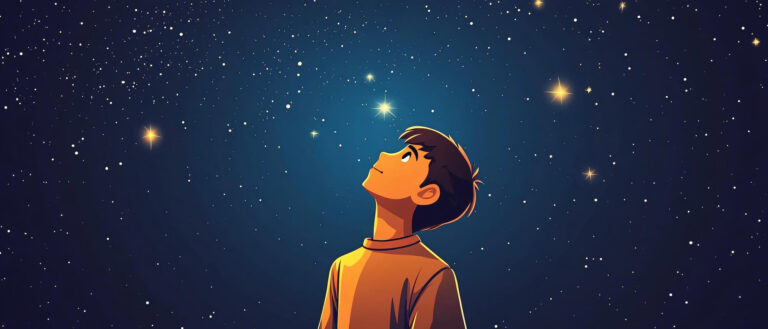
Lost in Space
But we are not just lost. We are blind. We are in pain. We are broken. The sooner we admit this, the easier it becomes—for ourselves and for those around us. We cannot be our own salvation.
We need someone outside of ourselves to restore us, set things right, and help us move forward. We need a return to innocence and a life of connection with our God and Creator.
We Are Created
Consider the beginning of this reflection. We are created beings. Whether by God, by some cosmic force, by matter and energy, or by something else entirely—we did not create ourselves. We were created. This is where we must start.
We have the capacity to process emotions, thoughts, narratives, metaphors, ideologies, art, and science. Among all that exists on this planet, we humans constantly yearn for love, growth, truth, justice, freedom, family, value, land, and belief.
We long to share meaning about who we are. The greatest discovery we can make is to understand who God is and to recognize His call for us to belong in His realm—in this reality and in eternity.
To know, embrace, and freely choose: we come from Him, a loving God. We are created in His image. He has revealed Himself to us and invites us on an epic journey of transformation into who we were always meant to be.
The God who seeks us
The God of the Bible knew this. He knows it now, and He will continue to reach out to us. He seeks us and reminds us that He chooses us just as we are. He gives us Jesus, who is the way, the truth, and the life. Restoration, healing, and transformation all come through faith in Him.
He is the image of the invisible God,
the firstborn of all creation.*
— Colossians 1:15
Created in whose image? God’s. For what purpose? To multiply. Think of why we have children—we desire to multiply beauty, what is precious, and what is valuable. We are all precious to Him.
This is the only basis that makes sense. This is the only foundation that allows us to coexist with others. We are all created in His image—male and female, old and young, near and far, from every direction and every nation.
Rooted in Him
The God of the Bible roots our identity in Him, not in contrast to others. As we embrace our value in Him, we embrace others and treat them with dignity. Every person has an identity and destiny that is from Him and returns to Him—our God and Creator.
We began in His hands, not by our own choosing, but by His intention. We were created in His image, carrying something of Him within us long before we ever asked, “Who am I?”
As life unfolds, eternity presses quietly against our hearts—a soft but persistent longing for meaning, for belonging, for home. We reach. We name ourselves. We measure ourselves. We try to build identity from what we can grasp. Yet the echo of our origin is always there, guiding us, reminding us, calling us.
His word guides us homeward, toward YHWH—the one who dwells with humanity, who restores what was broken, and who welcomes those who came from Him.
They shall see his face, and his name
shall be on their foreheads.*
— Revelation 22:4
From Him we come, and to Him we return—whole, known, and finally where we always belonged. We are bearers of His image.
The choice before us
So here we stand at the crossroads.
We can continue inventing ourselves—piecing together an identity from achievements, opinions, failures, and the shifting mirrors of other people’s expectations. We can keep building and rebuilding, never quite satisfied, never quite whole. This path is familiar. It’s what everyone else seems to be doing.
Or we can stop.
We can acknowledge that perhaps we were never meant to be self-made. That the deepest part of us already knows something our striving has been drowning out. That there is a name written on us that we didn’t choose—because it was given before we drew our first breath.
This isn’t about adding religion to our self-improvement project. This isn’t about becoming a better version of the person we’ve been trying to construct. This is about surrender. This is about remembering.
The God who created us in His image is calling us home—not to who we’ve made ourselves to be, but to who we’ve always been. This journey requires us to let go of the identity we’ve been clutching so tightly. It requires faith that there is something better, something truer, waiting to be uncovered.
The question isn’t whether God will receive us. He already has. He’s been reaching toward us through every yearning for meaning, every hunger for belonging, every moment we’ve felt that something was missing.
The question is: Will we stop inventing and start remembering?
Will we release our grip on self-construction and discover who we were created to be?
The choice has always been ours. It still is.